
శబరిమల కేసు విచారణ అయ్యప్ప స్వామి సంప్రదాయాలపై సుప్రీంకోర్టులో కీలక వాదనలు
శబరిమల కేసు విచారణలో కీలక పరిణామాలు చోటుచేసుకుంటున్నాయి. Supreme Court of India రాజ్యాంగ ధర్మాసనం ముందు మంగళవారం జరిగిన శబరిమల కేసు విచారణలో పిటీషనర్ తరపు వాదనలు కొనసాగాయి. ఈ సందర్భంగా సీనియర్ న్యాయవాది V V Giri శబరిమల కేసు విచారణలో కీలక అంశాలను ప్రస్తావిస్తూ హిందూ ధర్మం, ఆలయ సంప్రదాయాల ప్రాముఖ్యతను వివరించారు.
శబరిమల కేసు విచారణలో విగ్రహం కేవలం మట్టి లేదా రాయి కాదని, హిందూ ధర్మంలో విగ్రహం ఒక “సజీవ దైవం”గా పరిగణించబడుతుందని వి.వి. గిరి పేర్కొన్నారు. శబరిమల అయ్యప్ప స్వామి విగ్రహానికి చట్టపరమైన వ్యక్తిత్వం (Legal Personality) ఉందని సుప్రీంకోర్టు రాజ్యాంగ ధర్మాసనానికి ఆయన స్పష్టం చేశారు. ఈ అంశం శబరిమల కేసు విచారణలో అత్యంత కీలకంగా మారింది.
శబరిమల అయ్యప్పస్వామి “నైష్ఠిక బ్రహ్మచారి” రూపంలో ఉంటారని, ఆ స్వామి ప్రత్యేక లక్షణాలను గౌరవించడం శబరిమల ఆలయ సంప్రదాయంలో భాగమని ఆయన వాదించారు. ప్రతి ఆలయానికి ప్రత్యేక ఆచారాలు, సంప్రదాయాలు ఉంటాయని, వాటిని మార్చడం సులభం కాదని శబరిమల కేసు విచారణలో ఆయన నొక్కిచెప్పారు. భక్తులు ఆలయానికి వెళ్లేది తమ భక్తిని వ్యక్తపరచడానికి గానీ, ఆచారాలను ప్రశ్నించడానికి కాదని వి.వి. గిరి అభిప్రాయపడ్డారు.
మరింతగా, శబరిమల కేసు విచారణలో మతపరమైన హక్కులు (Religious Rights), ఆచారాలు (Temple Traditions), రాజ్యాంగ నైతికత (Constitutional Morality) వంటి అంశాలపై సుదీర్ఘ చర్చ జరిగింది. ఒక వ్యక్తి తన మతాన్ని అనుసరించాలంటే, ఆ ఆలయ సంప్రదాయాలకు లోబడి ఉండాల్సిందేనని వి.వి. గిరి తెలిపారు. రాజ్యాంగ నైతికత కంటే మతపరమైన విశ్వాసాలు, ఆచారాలకు ప్రాధాన్యత ఇవ్వాలని ఆయన అభిప్రాయపడ్డారు
To get more interesting news, click the link below.
Sabarimala Case Hearing Supreme Court Examines Temple Traditions and Religious Rights
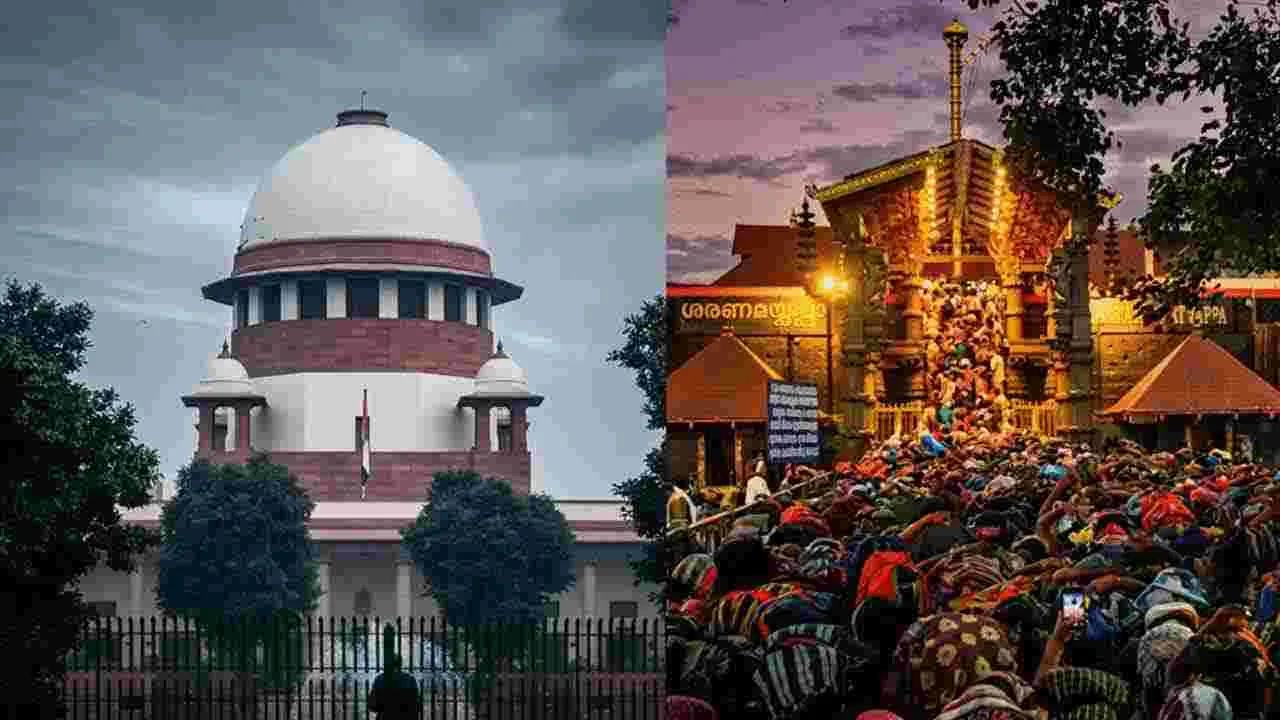
The Sabarimala case hearing continued on Tuesday before the Constitutional Bench of the Supreme Court of India, with intense arguments focusing on Sabarimala temple traditions, religious rights, and the legal status of deity in India. The proceedings are part of the ongoing Supreme Court Sabarimala case, which has remained a key legal and social issue across the country.
Appearing for the petitioners, senior advocate V V Giri presented detailed arguments emphasizing the spiritual and legal significance of idols in Hindu temple traditions. He stated that an idol is not merely a physical object made of stone or clay but is considered a “living deity” with defined characteristics. In the context of the Sabarimala case hearing, he argued that the idol of Lord Ayyappa possesses a legal personality, a concept recognized in Indian law, making the Sabarimala issue more complex than a simple matter of access.
Highlighting the uniqueness of Ayyappa temple traditions, V.V. Giri explained that Lord Ayyappa at Sabarimala is worshipped as a “Naishtika Brahmachari,” meaning an eternal celibate. He argued that respecting this core belief is essential to preserving Sabarimala temple customs. According to him, each temple in India follows its own established religious practices and temple traditions, and these cannot be altered without affecting the faith of millions of devotees.
During the Sabarimala case hearing, he further stressed that devotees visit temples to express devotion and faith, not to challenge or question temple customs. The ongoing Sabarimala case revolves around maintaining the sanctity of long-standing traditions while balancing constitutional values.
The Constitutional Bench of the Supreme Court is currently examining broader questions related to religious freedom in India, constitutional morality vs religious beliefs, and the extent to which courts can intervene in temple traditions. The Supreme Court Sabarimala case has raised critical questions about whether religious rights and Sabarimala temple traditions should take precedence over principles of equality and constitutional morality.
V.V. Giri argued that when an individual chooses to practice a religion, they must adhere to its established temple customs and religious practices. He maintained that in the Sabarimala case, religious beliefs, Ayyappa temple traditions, and the sanctity of the deity should be respected and protected.
As the Sabarimala case hearing continues, the outcome is expected to have far-reaching implications on Hindu temple traditions, religious rights in India, and the interpretation of constitutional principles in matters of faith. The final verdict in the Supreme Court Sabarimala case is likely to shape the future of how temple traditions and religious practices are viewed under Indian law.
Satya Telangana is a Telugu daily newspaper delivering the latest news and updates.