
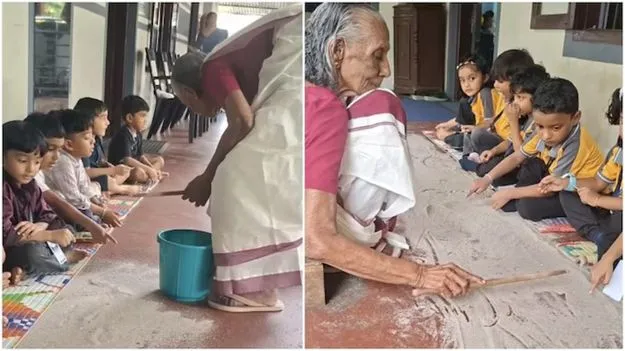
కేరళ బామ్మ వినూత్న బోధనా విధానం వైరల్.. ఇసుకపై అక్షరాలు దిద్దిస్తూ చిన్నారులకు విద్యాబోధన!
డిజిటల్ పాఠాలకు భిన్నంగా సంప్రదాయ పద్ధతిలో ఇంగ్లీష్ నేర్పిస్తున్న ఆశాట్టి అమ్ముమ్మ | సోషల్ మీడియాలో వైరల్గా మారిన వీడియో | ఉపాధ్యాయులకు సరికొత్త బోధనా స్ఫూర్తి
కేరళ: విద్యార్థులకు పాఠాలు సులభంగా అర్థమయ్యేలా బోధించడం ఒక కళ. పుస్తకాలు, డిజిటల్ స్క్రీన్లు, స్మార్ట్ క్లాస్రూమ్లతో సంబంధం లేకుండా కూడా పిల్లల్లో నేర్చుకోవాలనే ఆసక్తిని పెంచవచ్చని కేరళకు చెందిన ఓ వృద్ధురాలు తన వినూత్న బోధనా విధానంతో చూపిస్తున్నారు. చిన్నారులకు ఇసుకపై అక్షరాలు రాయిస్తూ ఇంగ్లీష్ నేర్పిస్తున్న ఆశాట్టి అమ్ముమ్మ వీడియో ప్రస్తుతం సోషల్ మీడియాలో చర్చనీయాంశంగా మారింది.
ఇసుకపై అక్షరాలు.. పిల్లలకు సులభంగా పాఠాలు!
ప్రస్తుత డిజిటల్ యుగంలో విద్యాబోధనలో సాంకేతిక పరిజ్ఞానం కీలక పాత్ర పోషిస్తోంది. స్మార్ట్ బోర్డులు, ప్రొజెక్టర్లు, ట్యాబ్లెట్లు, ఆన్లైన్ తరగతుల ద్వారా విద్యార్థులకు పాఠాలు బోధిస్తున్నారు. అయితే, పిల్లలు నేర్చుకోవడానికి ఖరీదైన పరికరాలే అవసరం లేదని, సరళమైన బోధనా పద్ధతులతోనూ వారిలో ఆసక్తిని పెంచవచ్చని కేరళకు చెందిన ఆశాట్టి అమ్ముమ్మ నిరూపిస్తున్న తీరుపై నెటిజన్లు స్పందిస్తున్నారు.
చిన్నారులకు ఇంగ్లీష్ అక్షరాలు నేర్పించేందుకు ఆమె ఇసుకను బోధనా సాధనంగా ఉపయోగిస్తున్నారు. ఒక బకెట్లో ఇసుకను తీసుకువచ్చి పిల్లల ముందు పరచి, పుల్ల సాయంతో ఆ ఇసుకను చదునుగా చేస్తున్నారు. అనంతరం ఒక్కో అక్షరాన్ని ఇసుకపై రాస్తూ దాని ఆకారాన్ని పిల్లలకు వివరిస్తున్నారు. అక్షరాలను రాయడంతోపాటు వాటి కర్సివ్ రూపాలను కూడా ఓపికగా నేర్పిస్తున్నారు.
వేళ్లతో అక్షరాలు దిద్దుతూ నేర్చుకుంటున్న చిన్నారులు
ఆశాట్టి అమ్ముమ్మ అక్షరాలను రాసి చూపిస్తుండగా, చిన్నారులు సైతం తమ వేళ్లతో ఇసుకపై వాటిని అనుసరిస్తూ రాస్తున్నారు. ఈ విధానంలో పిల్లలు అక్షరాలను కేవలం చూడటమే కాకుండా, స్వయంగా రాసి సాధన చేసే అవకాశం పొందుతున్నారు.
సాధారణంగా చిన్నారులకు అక్షరాలు నేర్పించే సమయంలో ఒకే విధమైన పద్ధతిని అనుసరిస్తే కొంతమంది విద్యార్థులు ఆసక్తి కోల్పోయే అవకాశం ఉంటుంది. అలాంటి సందర్భాల్లో ఆటలతో కూడిన అభ్యాసం, చేతులతో చేసే కార్యకలాపాలు, ప్రత్యక్ష సాధన వంటి పద్ధతులు పిల్లలను పాఠాల్లో భాగస్వాములను చేయడానికి ఉపయోగపడతాయి.
ఇసుకపై అక్షరాలు రాయించే ఈ బోధనా విధానం కూడా పిల్లలకు నేర్చుకునే ప్రక్రియను ఆసక్తికరంగా మార్చే ప్రయత్నంగా కనిపిస్తోంది. అక్షరాల ఆకారాలను గుర్తించడం, వాటిని అనుసరించి రాయడం, పదేపదే సాధన చేయడం ద్వారా ప్రాథమిక రచనా నైపుణ్యాలను అభ్యసించేందుకు అవకాశం కలుగుతుంది.
డబ్బు కంటే విద్యాబోధనపై మక్కువ!
ఆశాట్టి అమ్ముమ్మ పిల్లలకు పాఠాలు నేర్పిస్తున్న దృశ్యాలను ఇన్స్టాగ్రామ్ యూజర్ ‘మోమ్ ఆఫ్ సఫాచీ’ షేర్ చేసినట్లు అందించిన సమాచారం పేర్కొంటోంది. పాఠశాలలో చిన్నారులకు ఆమె ఈ ప్రత్యేక బోధనా పద్ధతిని ఉపయోగించినట్లు వీడియో వివరణ ద్వారా తెలుస్తోంది.
ఎలాంటి ఆధునిక సాంకేతిక పరికరాలు లేకుండా, అందుబాటులో ఉన్న ఇసుక, పుల్ల వంటి సాధారణ వస్తువులతోనే పిల్లలకు అక్షరాలు నేర్పించడం ఈ వీడియోలో ప్రధాన ఆకర్షణగా నిలిచింది. విద్య పట్ల ఆసక్తితో చిన్నారులకు బోధిస్తున్న ఆమె తీరుపై సోషల్ మీడియా వినియోగదారులు ప్రశంసలు వ్యక్తం చేస్తున్నారు.
అయితే, ఆమె బోధనా సేవలకు సంబంధించిన పూర్తి వివరాలు, ఈ తరగతులు ఎక్కడ నిర్వహిస్తున్నారు, ఎంతకాలంగా పిల్లలకు పాఠాలు చెబుతున్నారు వంటి అంశాలపై మరింత సమాచారం అందుబాటులో ఉంటే ఈ సేవల గురించి స్పష్టమైన అవగాహన కలుగుతుంది.
డిజిటల్ విద్యకు ప్రత్యామ్నాయంగా సంప్రదాయ బోధనా పద్ధతులు
నేటి విద్యా వ్యవస్థలో డిజిటల్ సాంకేతికతకు ప్రాధాన్యం పెరుగుతున్నప్పటికీ, సంప్రదాయ బోధనా పద్ధతులకు కూడా ప్రత్యేక స్థానం ఉంది. ముఖ్యంగా చిన్నారులకు అక్షర పరిచయం, చేతిరాత సాధన, ప్రాథమిక భాషా నైపుణ్యాలను అభివృద్ధి చేసే సమయంలో ప్రత్యక్ష అభ్యాసం ఉపయోగకరంగా ఉంటుంది.
ఇసుకపై అక్షరాలు రాయించడం, నేలపై అక్షరాల ఆకారాలు గీయించడం, వస్తువుల సహాయంతో సంఖ్యలను నేర్పించడం, ఆటల ద్వారా పదాలను పరిచయం చేయడం వంటి పద్ధతులను ఉపాధ్యాయులు తరగతి గదుల్లో ఉపయోగించవచ్చు. ఇవి విద్యార్థులను చురుకుగా పాల్గొనేలా చేయడంలో సహాయపడతాయి.
అయితే, డిజిటల్ విద్య పూర్తిగా అవసరం లేదని ఈ వీడియో నిరూపించినట్లు భావించాల్సిన అవసరం లేదు. సాంకేతిక పరిజ్ఞానం, పుస్తకాధారిత బోధన, చేతులతో చేసే అభ్యాసం వంటి పద్ధతులను విద్యార్థుల వయస్సు, అవసరాలకు అనుగుణంగా సమన్వయం చేయడం మరింత ప్రయోజనకరంగా ఉంటుంది.
ఉపాధ్యాయులకు ఓ కొత్త స్ఫూర్తి
విద్యార్థుల దృష్టిని ఆకర్షించడం, పాఠాలను సులభంగా అర్థమయ్యేలా వివరించడం, వారు స్వయంగా సాధన చేసే అవకాశాలను కల్పించడం ప్రతి ఉపాధ్యాయుడికీ ముఖ్యమైన అంశాలు. ఆశాట్టి అమ్ముమ్మ ఉపయోగిస్తున్న ఇసుకపై అక్షరాలు రాయించే విధానం తక్కువ ఖర్చుతో అమలు చేయగల అభ్యాస పద్ధతికి ఒక ఉదాహరణగా నిలుస్తోంది.
ప్రత్యేకించి ప్రాథమిక విద్యలో విద్యార్థుల ఆసక్తిని పెంచేందుకు ఉపాధ్యాయులు ఇటువంటి సృజనాత్మక పద్ధతులను పరిశీలించవచ్చు. విద్యాబోధన అంటే కేవలం పాఠ్యపుస్తకంలోని అంశాలను చదివి వినిపించడం మాత్రమే కాదు; విద్యార్థులు అర్థం చేసుకునేలా, ఆచరణలో పెట్టేలా మార్గనిర్దేశం చేయడం కూడా.
మొత్తంగా, కేరళకు చెందిన ఆశాట్టి అమ్ముమ్మ ఇసుకపై అక్షరాలు దిద్దిస్తూ చిన్నారులకు ఇంగ్లీష్ నేర్పిస్తున్న వీడియో సరళమైన బోధనా పద్ధతుల ప్రాధాన్యాన్ని మరోసారి గుర్తుచేస్తోంది. ఆధునిక సాంకేతికతతోపాటు సృజనాత్మకత, సహనం, ప్రత్యక్ష అభ్యాసం కూడా విద్యార్థుల నేర్చుకునే ప్రక్రియలో కీలక పాత్ర పోషిస్తాయని ఈ వీడియో తెలియజేస్తోంది.
To get more interesting news, click the link below.
Kerala Grandmother’s Unique Teaching Method Goes Viral: Teaching English Letters Using Sand Wins Hearts
Kerala Viral Video: A grandmother teaches English alphabets and cursive writing using sand and a simple stick. Her innovative teaching method is winning appreciation on social media.
Kerala: Teaching is an art that requires patience, creativity, and an understanding of how students learn. While modern classrooms increasingly use smart boards, digital tools, and online learning platforms, a grandmother from Kerala is drawing attention for her simple and creative teaching method. A video showing her teaching English letters to children using sand and a stick has gone viral on social media, attracting appreciation for her approach to early learning.
Known as Ashaatti Ammumma, the elderly woman is seen teaching young children through a traditional, hands-on learning activity. Her unique teaching method demonstrates how simple materials can be used to make learning more engaging, especially for young learners who are beginning to recognise and write English alphabets.
Kerala Grandmother’s Unique Teaching Method Goes Viral
In an age when digital education is becoming increasingly popular, this Kerala grandmother’s teaching method offers a glimpse into a simple, activity-based approach to learning. Instead of relying on expensive educational equipment or digital screens, she uses sand and a stick to introduce children to English letters.
According to the information accompanying the viral video, it was shared on Instagram by a user identified as ‘Mom of Safachi’. The video reportedly shows Ashaatti Ammumma conducting a learning session for a group of children at a school.
She brings a bucket of sand, spreads it in front of the children, and smooths its surface with a stick. She then begins writing English letters on the sand, demonstrating their shapes and explaining how to reproduce them.
This sand teaching method turns a basic learning activity into an interactive experience, allowing children to observe the letters and practise writing them themselves.
Children Learn English Alphabets by Writing in Sand
One of the most interesting aspects of the video is the way the children participate in the lesson. As Ashaatti Ammumma writes the English letters on the sand, the children use their fingers to trace the same letters on the surface.
She also demonstrates cursive writing, patiently showing the children how English letters can be formed in different styles.
For young learners, practising letter formation is an important part of developing early writing skills. Activities involving tracing, drawing, and repeating letter shapes can provide opportunities to strengthen familiarity with alphabets and improve writing practice.
The innovative teaching method used by the Kerala grandmother encourages children to participate rather than simply watch a lesson. By allowing them to practise each letter, the activity makes learning more hands-on and engaging.
No Expensive Equipment Needed for This Teaching Method
Modern education increasingly incorporates technology through smart classrooms, educational applications, tablets, and online learning platforms. These tools can offer valuable learning opportunities, but the viral video highlights another important aspect of education: creative teaching does not always require advanced equipment.
Sand, a stick, and a little space are enough to demonstrate the basic concept of letter formation in this activity.
The Kerala grandmother teaching English using sand has therefore attracted attention as an example of low-cost, activity-based learning. Such methods can be adapted by teachers and parents to help children practise writing in an informal and engaging environment.
Similar activities, including writing letters on sand trays, tracing alphabets with fingers, drawing shapes, and learning numbers through games, can complement regular classroom teaching.
However, traditional learning methods do not need to replace digital education. Instead, combining practical activities with books, classroom instruction, and suitable digital resources can provide children with a variety of learning experiences.
Social Media Users Appreciate Her Dedication to Teaching
The video has drawn attention to Ashaatti Ammumma’s patience and enthusiasm while teaching young children. Social media users have reportedly appreciated her simple approach, particularly the way she uses readily available materials to make lessons interactive.
Her teaching style has also renewed interest in traditional educational practices that encourage children to learn through observation and direct participation.
The appeal of the video lies not only in the use of sand but also in the grandmother’s patient demonstration of each letter. Rather than making the activity complicated, she breaks the lesson into simple steps that children can follow.
Although the full details of her background and teaching activities are not available in the information provided, the video offers an example of how an individual’s creative approach to education can attract attention online.
Why Activity-Based Learning Matters for Children
Early childhood is an important stage for developing foundational skills such as recognising letters, learning sounds, improving hand coordination, and beginning to write. Teachers often use activities, games, demonstrations, and practical exercises to make these concepts easier to understand.
The sand-based teaching method shown in the video provides an opportunity for children to practise letter formation using their fingers. It also allows them to repeat the activity without needing paper and pencils for every attempt.
Some potential benefits of this type of activity include:
- Hands-on learning: Children actively participate in forming letters.
- Writing practice: Repeated tracing gives children opportunities to practise letter shapes.
- Engagement: Interactive activities can help sustain children’s interest in a lesson.
- Low-cost teaching: Sand and simple tools can be used instead of specialised equipment.
- Creative education: Teachers can adapt the method to introduce alphabets, shapes, and numbers.
The effectiveness of any teaching approach depends on the child’s age, learning needs, and the way the activity is conducted. Sand writing can complement structured lessons and regular writing practice.
A Lesson for Teachers and Parents
The viral video of the Kerala grandmother offers a reminder that effective teaching involves more than presenting information. Encouraging children to participate, giving them time to practise, and choosing methods suited to their learning needs can make lessons more accessible.
Teachers may adapt the innovative teaching method by creating simple sand trays in classrooms or using other safe, reusable materials for tracing letters. Parents can also introduce supervised alphabet activities at home to help children become familiar with English letters.
The central idea is to make learning interactive and enjoyable while ensuring that children gradually develop the skills they need.
Satya Telangana is a Telugu daily newspaper delivering the latest news and updates


